‘We’ve been abandoned’: Some Md. business owners say Gov. Wes Moore left them behind
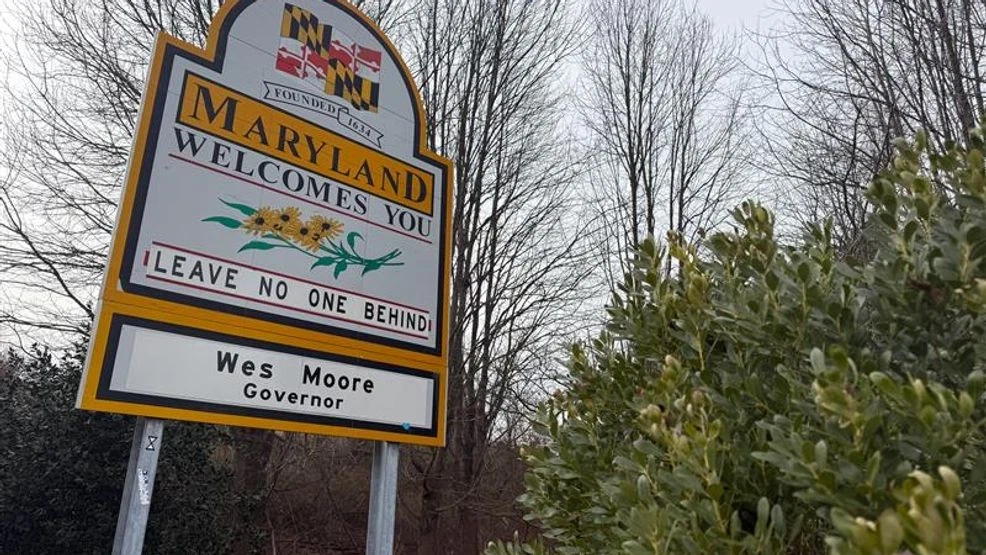
Photo by Zackary Lang/Spotlight on Maryland
Article published on February 20, 2026 by Fox Baltimore
Written by Gary Collins
PRINCE FREDERICK, Md. (WBFF) — When Wes Moore first ran for governor, he framed his candidacy around a simple promise: Maryland would “leave no one behind.”
The phrase helped propel him into office. It appears on state welcome signs. It anchors speeches. And just last week, standing before lawmakers in Annapolis, Moore repeated it again at the end of his State of the State address.
“Let’s keep up the work. Let’s keep up the faith. And let’s make sure we ‘Leave No One Behind,’” he said.
But across the state, some small business owners told Spotlight on Maryland they feel unseen and, in some cases, abandoned.
Promise vs. perception
Maryland is home to more than 6 million people. The concerns raised in this story do not represent every voter, business owner, or industry in the state.
But even if only a fraction of Marylanders feel excluded, that could amount to hundreds of thousands or more.
And more than a million Republican voters could feel left behind as the governor pushes a redistricting proposal that would eliminate the state’s only district that voted for a Republican.
As the governor runs for a second term, Spotlight on Maryland is speaking with a variety of business owners and state residents about how they’re faring during the Moore administration.
So far, responses from Marylanders have been consistent and reflect a disconnect between statewide economic messaging and their on-the-ground experiences.
A seventh-generation farmer questions the state budget
On Wednesday, during an unseasonably mild February afternoon, Charles Cox climbed onto his tractor and moved through his family farm in Southern Maryland. Cows shifted inside the barn. Preparations for spring planning were underway at Spider Hall Farms.
Cox’s family roots on the Maryland land date back seven generations, he said.
“The original homeplace, down off of Sixes Road, has been in the family since 1831,” Cox said.
Now, he says, a growing share of his time is spent not just tending livestock but navigating regulations and reviewing state policy shifts that he believes strain agricultural operations.
“Overregulation. Having our hands tied with bureaucracy,” Cox said when asked about the biggest challenge facing his farm.

In his address, Moore said reducing unnecessary regulation remains a priority and that his administration is committed to economic fairness. Meanwhile, when asked whether the governor’s promise to “leave no one behind” resonated on his farm, Cox hesitated.
I don’t know if he has left us behind or if he has really even considered us,” Cox said. “We’re not in his purview, I don’t think.”
When asked why, Cox said, “The budget, for one.”
Moore last year signed into law the largest tax and fee increase in state history and vowed this year not to raise taxes.
Maryland has faced structural budget pressures that lawmakers have grappled with in recent sessions, and deficits are forecast to continue through at least 2031. Spotlight on Maryland has previously reported that state analysts acknowledge rising costs in education mandates, transportation needs, and energy transition goals as pressures that have required a mix of spending controls and revenue adjustments.

For farmers operating on a thin margin and facing volatile input costs, incremental tax or fee increases needed to balance the state’s finances can alter long-term planning.
‘Locked up their wallets’
A short drive away in Prince Frederick, café owner Catherine Hamilton described what she sees as a shift in consumer behavior during the past three years.
“I think people have definitely locked up their wallets because we don’t know what’s going to happen,” Hamilton said.
The mother of a one-year-old son said customer traffic is down and average purchases are smaller at Mrs. Moo’s Corner.
Like many Maryland businesses Spotlight on Maryland has spoken with over the past year, Hamilton said fixed costs, especially utilities, are squeezing any remaining profits.
My electric bill is close to $1,800 a month. That has been a jump as well,” she said. “We haven’t changed anything, we haven’t added more equipment, or anything, in the past few years.”
Energy affordability has been a central theme of Moore’s economic messaging since the beginning of his first term. His administration has pointed to investments in clean energy and grid modernization, arguing that those moves position Maryland for long-term price stability.
Hamilton said her business has not seen short-term relief and had a message for Moore.
“Please help the family small businesses,” Hamilton said. “We’re just trying to make a decent living, pay our bills, provide for our little ones.”
‘We’ve been abandoned’
Across the Bay Bridge in Stevensville, Brian Hardman, a fishing charter captain with Lead Dog Charters, says the past two years have been among the hardest of his 38-year career.
When asked whether the governor has left his industry behind, Hardman said, “I would actually say it’s worse than that. We’ve been abandoned.”
Hardman described a sharp decline in bookings in the charter boat industry and said outreach to the governor’s office seeking assistance went unanswered.
We actually wrote the governor’s office asking for assistance and never heard anything at all,” he said. “And to this day, we still can’t get a response.”
Hardman also criticized what he views as policy disconnects between the Moore-Miller administration in Annapolis and conditions on the water locally.

“They talked about protecting the female fish in August or something,” Hardman said. “They’re disengaged. There are no female spawning fish in August in the Chesapeake Bay.”
According to a U.S. Department of the Interior report on fish reproduction in the Chesapeake Bay, conducted during former Democratic President Joe Biden’s administration from 2020 to 2022, blue catfish and striped bass, also known as rockfish, spawn in the spring. These fish are the primary catches during Hardman’s voyages.
Asked what the future looks like for his business, Hardman responded, “total uncertainty.”
Governor’s office responds
Spotlight on Maryland requested on Thursday a “brief interview” with Moore on the concerns raised by Cox, Hamilton, and Hardman. Within minutes, Moore’s press secretary, Ammar Moussa, responded by email.
“What are people citing,” Moussa asked. “Will you be noting the impact of Trump’s tariffs, what the Governor has worked on to lower energy costs, and put money in people’s pockets, his [legislation] to tackle predatory pricing at grocery stores?”
When pressed again for an interview request, Moussa noted that Moore is in Washington, D.C., for his duties as vice chair of the National Governors Association.
Moussa said the governor’s office would send a statement, but it had not been received by 5 p.m. Thursday.
Meanwhile, in his prior public remarks, Moore emphasized job growth, expanded apprenticeship programs, and efforts to attract federal and private investment to Maryland. His administration frequently highlights labor force development and strategic industry growth as pillars of long-term economic resilience, points Moore echoes on national talk shows.
Spotlight on Maryland will continue to report on how the Moore administration is impacting Marylanders across the state, including those who have benefited most from the governor’s first term. Send news tips to [email protected] or contact Spotlight on Maryland’s hotline at (410) 467-4670.


About The Author
